Advertising has changed more in the last decade than in the previous fifty years. Traditional billboards and posters are slowly giving way to dynamic digital experiences.
Businesses today want faster updates, better engagement, and measurable results. That’s where digital signage comes in, a modern, eye-catching way to connect with audiences through visuals and motion.
From shopping malls and airports to restaurants and trade shows, digital advertising displays now play a key role in brand storytelling. They help businesses move beyond static ads and create real-time connections that leave lasting impressions.
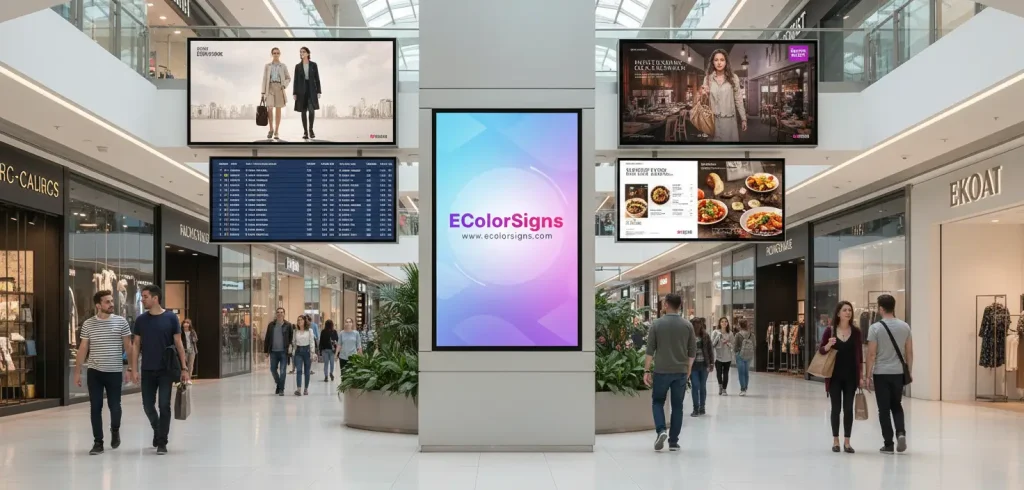
What Is Digital Signage?
In simple words, digital signage is a system that uses screens to share information, ads, or entertainment. These screens can be TVs, LED panels, or monitors — all managed through digital software.
Each setup usually includes:
- A display screen (like a TV or LED board)
- A media player that runs the content
- A software system to manage updates and schedules
- A network connection for real-time control
You’ve seen electronic signage in fast-food restaurants showing menus, or in airports guiding passengers — that’s digital signage in action. It’s clear, flexible, and designed to attract attention instantly.
How Digital Signage Works in Modern Advertising
Digital signage combines visuals, animation, and technology to make advertising smarter. Instead of printing new posters every time a promotion changes, a business can instantly update its display through a content management system (CMS).
Here’s how it works:
- Businesses design promotional or informational content.
- The content is uploaded to a digital signage CMS.
- The system sends it to business screens or LED panels.
- The content plays automatically on a schedule or loop.
This flexibility helps brands stay relevant. Whether it’s a morning coffee deal or a trade show announcement, updates can go live within seconds — keeping your marketing fresh and current.
Benefits of Using Digital Signage for Businesses
Digital signage offers several clear benefits that traditional signs simply can’t match:
- Instant updates: Change promotions or announcements with a few clicks.
- Cost savings: No printing, shipping, or replacement costs.
- Better engagement: Motion and color attract more attention than static images.
- Brand consistency: Content can match your visual identity across all locations.
- Smart targeting: Show different messages based on time, audience, or location.
- Data-driven insights: Measure impressions, dwell time, and performance.
For example, restaurants use digital advertising displays to show menu specials, while retail stores use business screens to feature new arrivals or flash sales.
Popular Types of Digital Advertising Displays
Indoor Electronic Signage
Indoor displays are found in offices, stores, schools, and healthcare centers. These help communicate updates, promote offers, or display directories.
- Ideal for lobbies and retail spaces.
- Easy to update without physical labor.
👉Read more: Indoor Office Signs
Outdoor Business Screens
Outdoor displays are powerful tools for high-traffic areas. Digital signage outside storefronts or on city streets grabs attention 24/7.
- Weather-resistant and bright even in daylight.
- Excellent for promoting local events or sales.
👉Explore: Outdoor Business Signs
LED Display Signs
LED screens bring high definition and vivid color to every campaign. They’re great for both indoor and outdoor use and are perfect for drawing attention in crowded spaces.
- Bright, energy-efficient, and long-lasting.
- Ideal for branding, product launches, and event promotions.
👉 Read more about: LED Display Signs
Trade Show Digital Displays
At trade shows, digital signage turns booths into engaging visual experiences. Businesses use electronic signage to showcase videos, demos, and testimonials — all on vivid, dynamic screens.
👉 Want to know more? Explore:
Real-World Applications of Digital Signage
Digital signage is versatile and adaptable across multiple industries:
| Industry | Use Case | Example |
|---|---|---|
| Retail | Promote sales, guide customers | Window displays and in-store ads |
| Hospitality | Menus, promotions, wayfinding | Digital restaurant boards |
| Corporate | Internal communication | HR updates, welcome screens |
| Healthcare | Queue systems, awareness content | Hospital waiting areas |
| Education | Announcements, events | School and campus updates |
| Events & Trade Shows | Product demos, sponsor ads | Exhibition screens |
With business screens, companies can engage their audience in ways traditional signs can’t match, visually, interactively, and instantly.
Tips for Effective Digital Signage Design
Design plays a key role in capturing attention. Follow these tips for success:
- Keep it short: Use simple text and bold visuals.
- Be clear: Your message should be understood in 3 seconds.
- Use contrast: Bright colors and clean fonts stand out.
- Schedule smartly: Time your messages for the right audience.
- Avoid clutter: One main idea per screen.
The best digital advertising displays use animation sparingly, enough to engage but not distract.
Future Trends in Digital Signage
The world of digital signage is evolving quickly. Here are some trends shaping the future:
- AI-powered personalization: Displays can adjust content based on audience behavior.
- Touchless interaction: Motion sensors and QR codes reduce touchpoints.
- Sustainability: Energy-efficient electronic signage reduces carbon footprints.
- Integration with mobile & IoT: Sync displays with apps for seamless experiences.
Businesses that embrace these innovations will stay ahead in the digital advertising landscape.
Conclusion – The New Era of Business Communication
Digital signage is no longer a luxury; it’s a necessity for modern advertising. It combines technology, creativity, and strategy to deliver messages that truly connect with audiences.
Whether through LED display signs, outdoor business screens, or indoor electronic signage, brands now have the power to communicate faster, clearer, and smarter than ever before.
👉 Explore full signage solutions at eColor Signs Services to elevate your next campaign.
FAQs
The main goal of digital signage is to share messages, promotions, or brand visuals quickly and effectively through screens.
It’s used to display ads, videos, or announcements on digital advertising displays in public or business spaces to attract attention and boost sales.
Retailers, restaurants, offices, and event organizers benefit most because they can easily update and control their promotions in real-time.
Not usually. Once installed, business screens require minimal maintenance, and updates can be made remotely, saving printing and labor costs.
LED signs are one type of digital signage, but digital signage also includes LCDs, touchscreens, and video walls with advanced content management systems.